From New Client Enquiry to KYC and Signed Engagement Letter
How professional firms can connect client information, screening, approval and engagement letters in one controlled onboarding workflow.

Xian Hui
11 August 2026
Quick answer
How can an AI agent help with client onboarding and KYC?
A connected onboarding workflow collects client and ownership information, organises KYC and screening results, tracks missing documents and routes exceptions for review. After the required checks and approvals, it generates the engagement letter from the approved service scope and monitors the engagement for renewal.
From New Client Enquiry to KYC and Signed Engagement Letter
Before work starts, a professional firm must establish who the client is, who owns and controls the business and what services the client requires. These decisions define the proposed engagement and whether the firm will accept it.
The process depends on client information, corporate records, identity documents and external searches. Missing documents and unresolved results delay approval, the engagement letter and the start of work.
A controlled workflow connects the information, checks, decisions and contract. It reduces repeated administration while leaving acceptance, risk and contractual decisions with the responsible people.
What must the firm establish before work starts?
The legal client name, ownership and control information, requested services and responsible representatives form the basis of the engagement. The firm also needs the information required to complete its checks and route the acceptance decision to the appropriate reviewer.
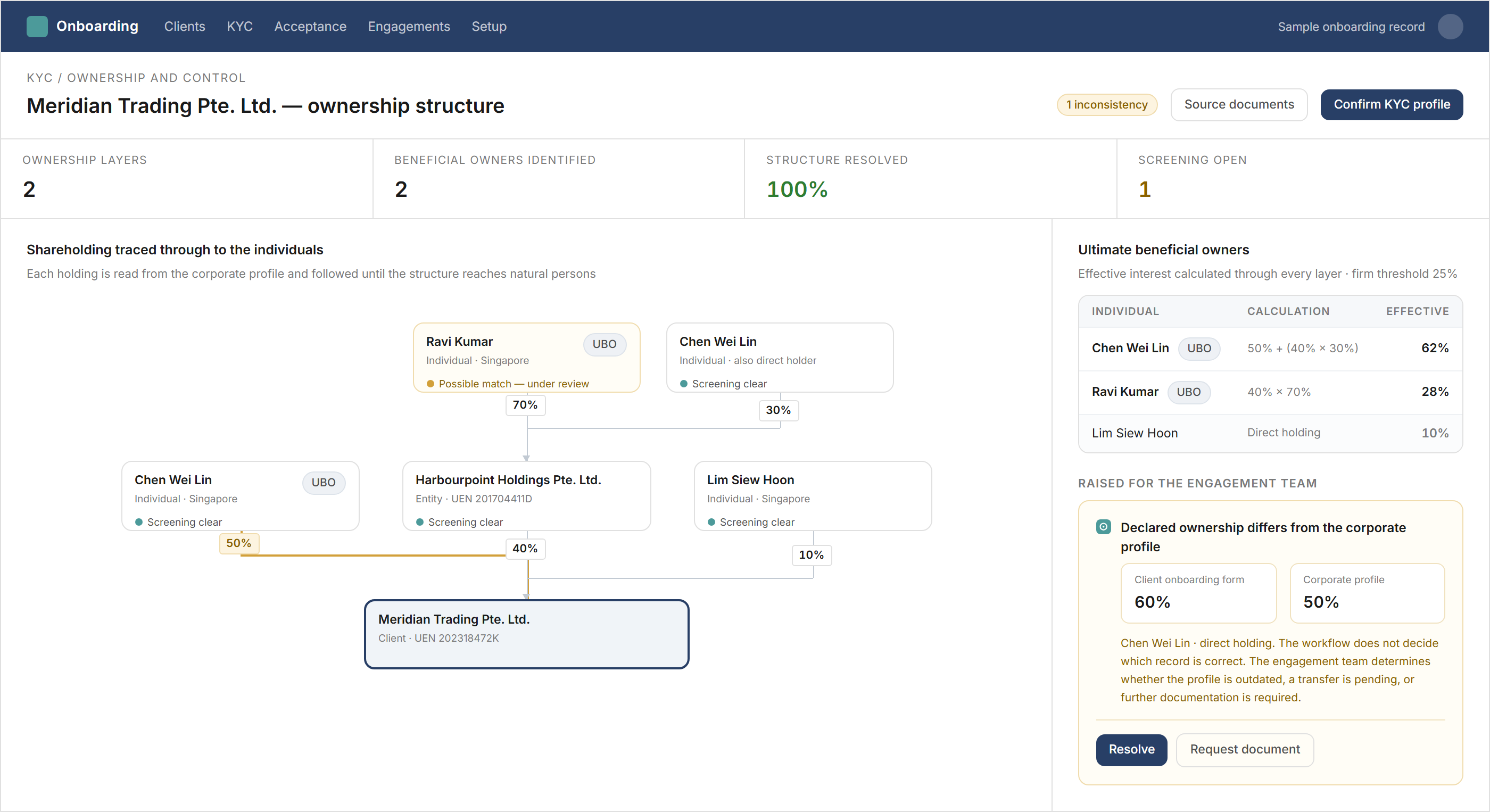
The ownership structure determines which people require identification and screening. The requested services determine the scope, responsibilities, fees and clauses in the engagement letter.
Information collected once should flow into the client record, approval package and engagement letter. For an auditor, the approved record can later support the process from client data to audit working papers. For an accounting firm, it can establish the service record used in a controlled month-end closing workflow.
What KYC and screening work continues during the engagement?
The Accounting and Corporate Regulatory Authority guidelines state that a registered corporate service provider must obtain and record at least:
- full name, including any alias
- identity or registration number
- residential address, place of business or registered office, and contact number
- date of birth, incorporation or registration
- nationality, including dual nationality, or place of incorporation or registration
For a company or foreign company, the provider must also establish and record the identities of all directors. It must enquire whether any beneficial owner exists, identify them and take reasonable measures to verify their identity using relevant information or data.
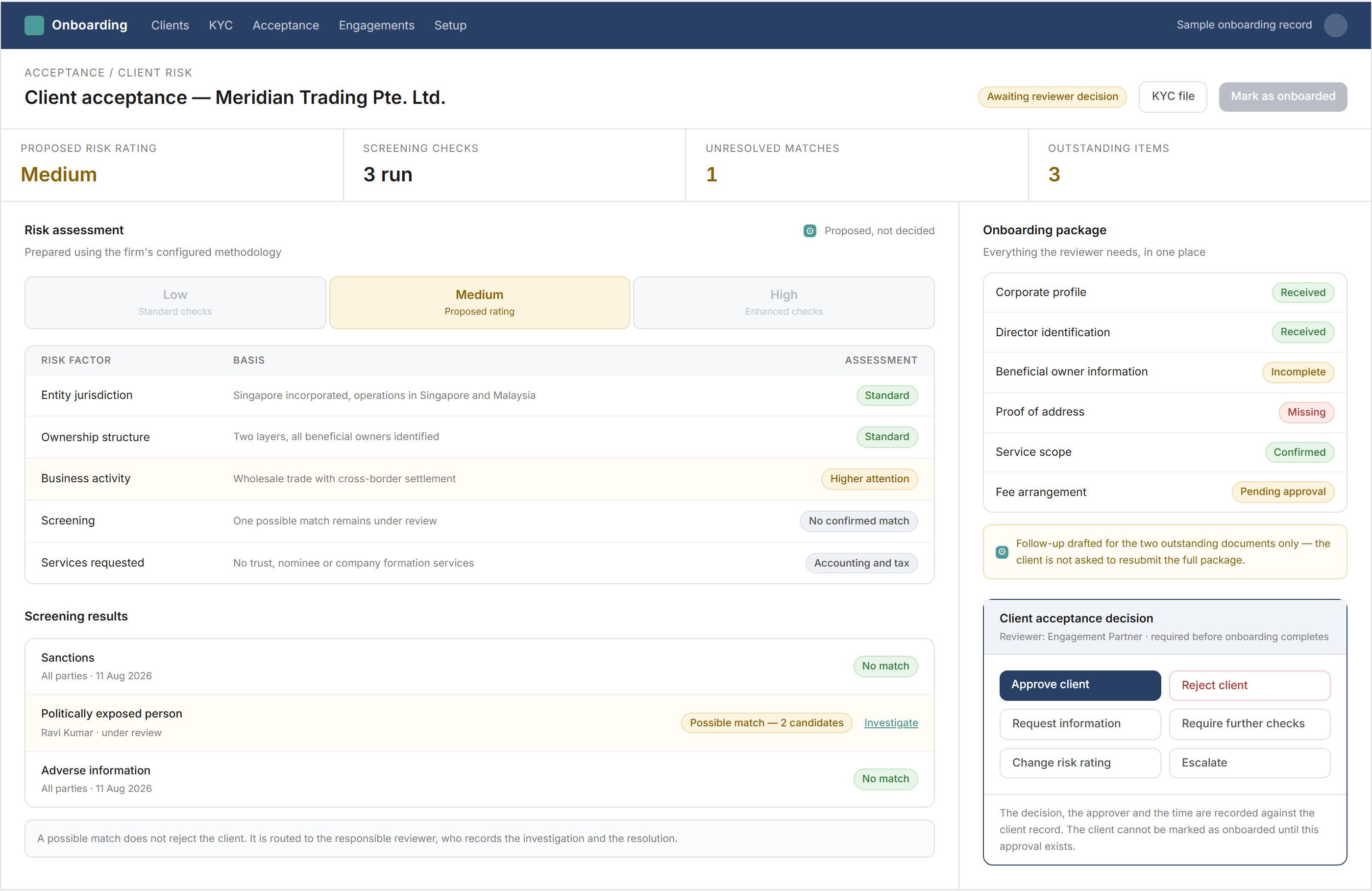
The guidelines require screening against the specified sanctions and alert lists. They state that a provider should also check for adverse news using public searches, commercial databases or other relevant sources, and should document the results and any determination.
For ongoing relationships, screening takes place periodically on a risk-sensitive basis according to the customer risk assessment, or when the authorities' lists change. The guidelines set no fixed interval. The provider must also conduct ongoing monitoring and keep customer due diligence information current under the framework established by the Corporate Service Providers Act 2024.
Why does client onboarding take time?
Clients may omit an identity document, provide an expired document or answer an ownership question without supporting records. Staff then follow up by email, receive another attachment and update a separate checklist.
KYC searches create another break. Staff may perform them in several platforms, capture the results and record the conclusion elsewhere. The reviewer must then assemble the evidence before deciding whether the checks are complete.
| Disconnected process | Connected workflow |
|---|---|
| Documents collected across email threads | Documents held against one client record |
| Searches performed in separate platforms | Results returned to the onboarding worklist |
| Missing items tracked manually | Outstanding items assigned and monitored |
| Evidence assembled at the end | Evidence available throughout the review |
| Engagement letter prepared separately | Letter generated from approved information |
These delays matter because onboarding gates the engagement. The firm cannot finalise the letter or begin the agreed work on a controlled basis until it resolves missing information, completes the required checks and records approval.
Why does the workload continue after onboarding?
Identity documents expire, corporate information changes and screening recurs at a frequency driven by the client's AML risk profile. A workflow should record expiry dates, prompt the responsible employee and preserve each replacement document with its review history.
Corporate structures with several levels add work because staff must follow each level and update the affected records and searches when the structure changes. The recurring process should build on the approved record so the reviewer can see what changed and what requires attention.
Why are engagement letters a separate bottleneck?
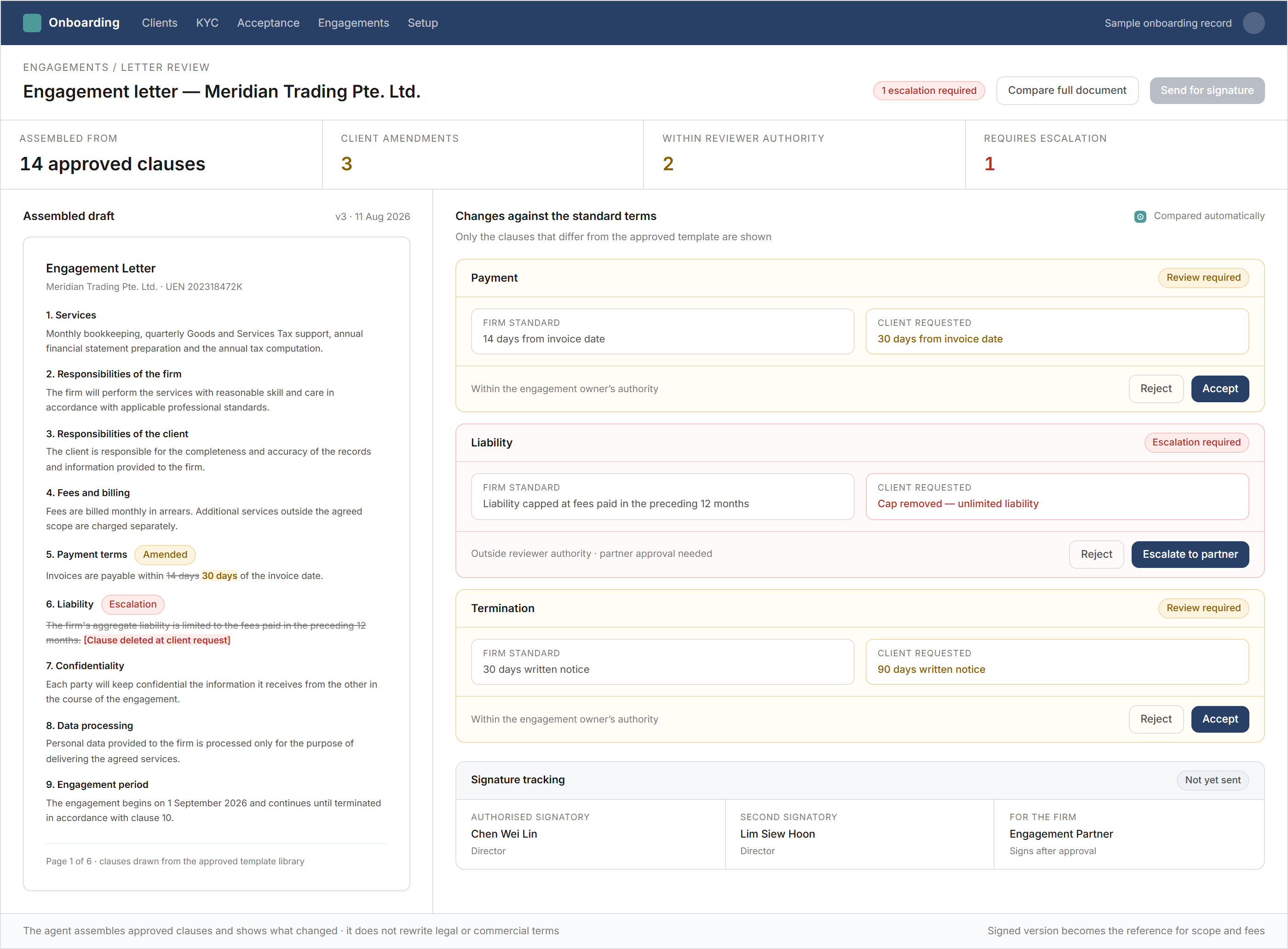
Manual drafting creates opportunities to use an outdated template, enter the wrong entity, omit an approved service or carry over terms from another client. The reviewer must compare the draft with the approved client, scope, fees and standard terms.
A controlled process generates the draft from approved information and clauses. It routes changes to payment, liability, termination or other terms to the appropriate reviewer. The signed version remains attached to the client record with its effective period and renewal date.
How does one connected onboarding workflow help?
The workflow starts with a structured request for client, ownership and service information. It records source documents, tracks missing items and presents the evidence to the responsible reviewer.
A connection to ACRA or its data service provider can retrieve current corporate information. Connections to KYC platforms can submit searches and return results to the client record. Automated adverse-media searches can collect reports for review.
AI can identify the person or entity named in a media report, summarise the relevant information and present the source. It should not make the acceptance decision or treat an apparent name match as confirmed.
After the required checks pass and the firm records approval, the workflow generates the engagement letter from the approved details, services, fees and controlled clauses. It routes the document for review and signature, then monitors the renewal date.
The same record can support practice management because it already holds the client, assigned employees, services, approvals, documents and recurring review dates. This applies the controlled division between system preparation and human approval used by an AI agent working across business processes.
Backbone helps accounting firms, corporate service providers and auditors connect client information, ongoing screening, approval and engagement letters in one controlled workflow — while keeping client acceptance, risk assessment and contractual decisions with the firm.
Frequently asked questions
This information has been prepared for general informational purposes only and is not intended to be relied upon as accounting, tax, or other professional advice.
Related articles
case-studies
From Audit Findings to Management Letter Points
How audit teams can connect findings, evidence, prior-year points, review and management responses in one controlled management letter drafting workflow.
case-studies
Pat: An AI Agent That Works Across Our Business
How an internal AI agent retrieves information, prepares routine work and coordinates approved actions across business systems while people retain authority.
case-studies
From Month-End Tasks to a Controlled Closing Workflow
How finance teams can connect close dependencies, source data, reconciliations, journals, exceptions and approvals in one controlled month-end workflow.