From Audit Findings to Management Letter Points
How audit teams can connect findings, evidence, prior-year points, review and management responses in one controlled management letter drafting workflow.

Xian Hui
30 July 2026
Quick answer
How can an AI agent help draft management letter points?
A controlled workflow retrieves the evidence behind an audit finding, identifies missing facts and checks for related current- or prior-year points. It then prepares the observation, implication and recommendation in the firm's format. The auditor confirms the evidence, reporting decision and final wording before discussing the point with management.
From Audit Findings to Management Letter Points
A useful management letter point must reflect the audit evidence and give management a clear basis for action. A finding recorded in a working paper is only the starting point.
The audit team must assemble the relevant facts, resolve gaps, consider related findings and prepare wording that remains consistent with the evidence. This work often coincides with clearing review notes and finalising the audit file.
A controlled drafting workflow connects those tasks. It prepares the point for review without transferring the reporting decision or client communication to the system.
Why does this work matter?
Singapore Standard on Auditing 265 requires auditors to communicate significant deficiencies in internal control in writing to those charged with governance. It also addresses communication of other deficiencies that merit management's attention. The Institute of Singapore Chartered Accountants’ SSA 265 page provides the applicable Singapore standard, while the International Auditing and Assurance Standards Board’s ISA 265 project records the corresponding international standard.
The communication must remain grounded in what the audit identified. Weak links between the finding, its potential effects and the final wording create more review work and make the point harder to defend or discuss with management.
The task also carries forward. Prior-year points and management responses affect how the team approaches unresolved matters in the current audit.
Why does drafting take time?
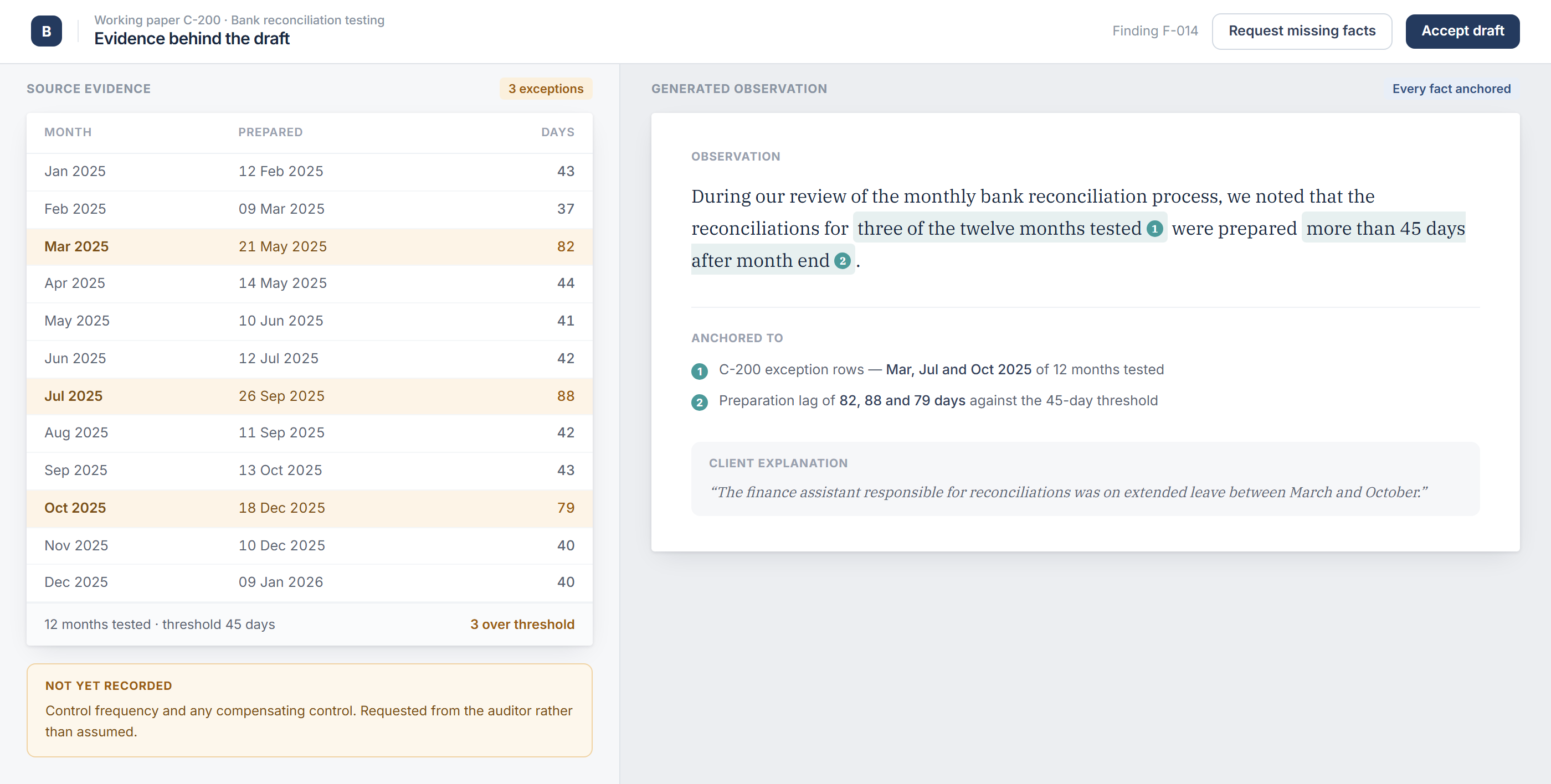
The information rarely sits in one record. An exception may appear in a test sheet, while its context sits in a process note, a client email or a review comment.
Before drafting, the team may need to:
- confirm the procedure, population and exceptions involved
- retrieve the client's explanation and supporting documents
- compare the matter with current- and prior-year findings
- identify missing facts and obtain management's response
Different team members may also describe similar findings in different ways. Reviewers then spend time reconciling the drafts, removing duplication and checking whether each implication and recommendation follows from the recorded facts.
Why do existing drafting tools fall short?
Working paper software holds audit evidence, but a finding may still need to be copied into a separate management letter template. The connection to supporting facts can weaken once drafting moves into a document.
A template standardises headings and layout. It does not locate the relevant evidence, identify an incomplete explanation or check whether another team member has already raised the same issue.
A general-purpose AI writing tool has the opposite problem. It can produce fluent text, but without controlled access to the relevant records it cannot establish which statements the audit file supports. Copying material into a separate prompt also creates another manual step and separates the output from its audit trail.
What information must remain connected?
The workflow needs a defined record for each finding. That record should link the source evidence, drafting status, review decisions and management response.
| Connected record | Purpose |
|---|---|
| Source working paper | Preserves where the finding arose |
| Test result or exception | Supports the factual observation |
| Client explanation | Records management's account of the matter |
| Related findings | Identifies duplicates and common causes |
| Prior-year point | Shows whether the matter has recurred |
| Review history | Records changes, questions and approval |
| Management response | Keeps ownership and target dates with the point |
This structure complements the process that turns client data into audit working papers. The management letter workflow starts from those prepared and reviewed records rather than recreating their contents elsewhere.
How does the controlled workflow operate?
The auditor records a finding against the relevant working paper or selects an exception already identified during testing. The workflow retrieves the connected test results, documents, explanations, process notes and previous points within the permitted scope.
It then identifies missing information and possible related findings. The system should ask for an absent control frequency or client explanation instead of inventing one, and present possible duplicates or recurring matters for the auditor to decide.
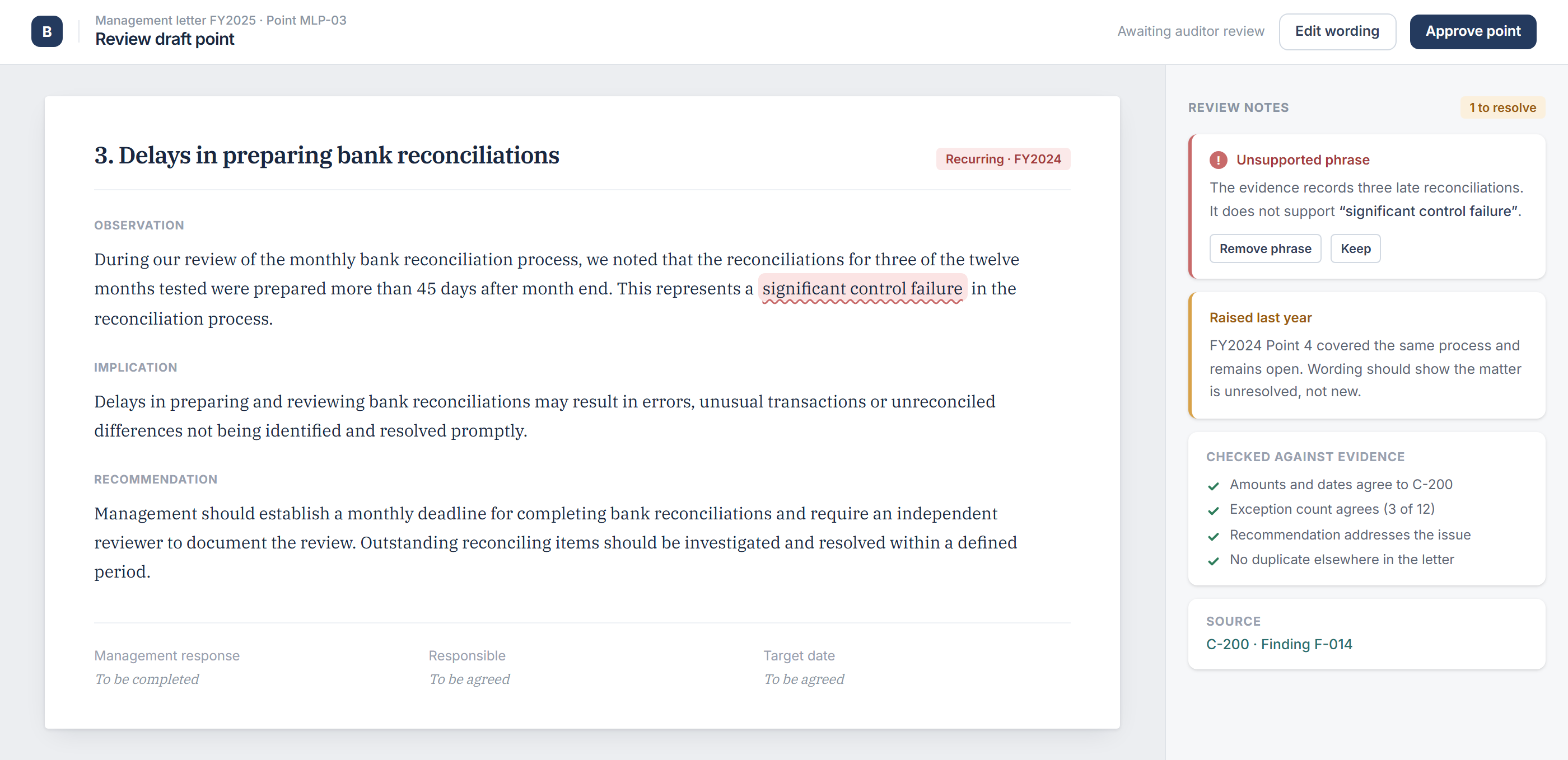
Once the facts are complete, the workflow prepares the observation, implication and recommendation in the firm's approved format. For example, an illustrative bank reconciliation point may state that 3 of the 12 months tested were prepared more than 45 days after month end, rather than using an unsupported general description.
The system checks dates, amounts and exception counts against the linked evidence. It also flags duplicated points, outdated prior-year wording and phrases that claim more than the records support.
Where does the auditor make the decisions?
The division of work should be explicit. The workflow prepares evidence and wording; the auditor makes the professional and communication decisions.
| Workflow stage | System prepares | Auditor decides |
|---|---|---|
| Finding capture | Source links and recorded facts | Whether the finding is valid |
| Evidence review | Connected records and identified gaps | Whether the evidence is sufficient |
| Related-point check | Possible duplicates and prior-year matches | Whether matters should be combined |
| Drafting | Observation, implication and recommendation | Whether the wording is fair and appropriate |
| Finalisation | Approved format and response fields | Reporting level and final communication |
The auditor also decides whether a proposed recommendation fits the client's circumstances. The system should preserve amendments and approval rather than treating its first draft as complete.
This follows the same controlled division used by an AI agent working across business processes: preparation may be automated, while consequential decisions remain with the responsible person.
How are management responses and follow-up handled?
After discussing the point with management, the team records the response, responsible person and target date against the same finding. The approved wording and response then flow into the assembled letter without further re-entry.
The workflow can retain unresolved points for the next audit period and present them beside current findings. It should not decide that a repeated matter requires stronger treatment; it should give the auditor the history needed to make that assessment.
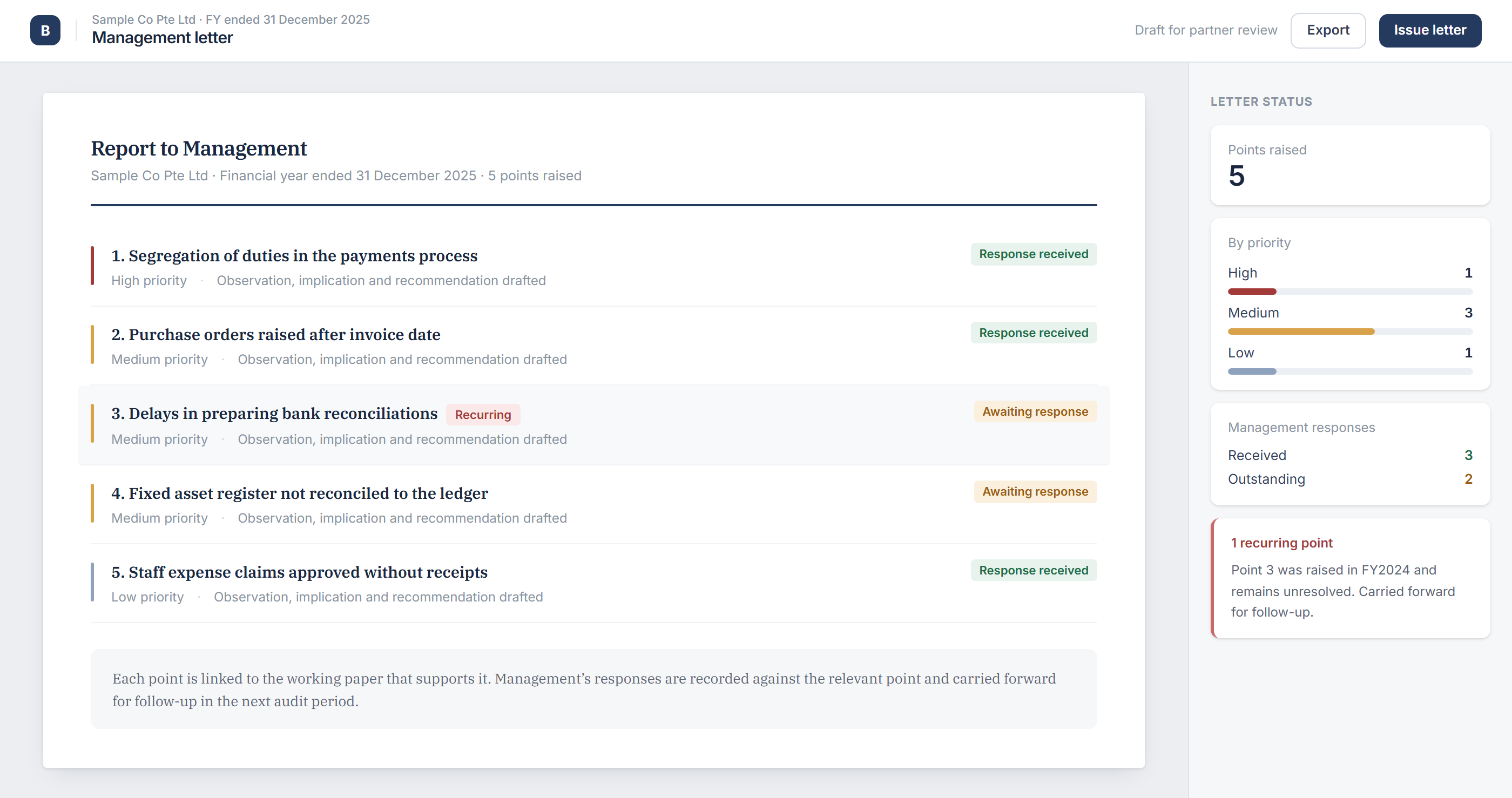
The resulting record supports the firm's audit automation workflow from finding through review, response and follow-up. Backbone helps audit teams connect working paper evidence, management letter drafting and approval in one controlled workflow — while keeping final judgement and client communication with the engagement team.
Frequently asked questions
This information has been prepared for general informational purposes only and is not intended to be relied upon as accounting, tax, or other professional advice.
Related articles
case-studies
From Client Data to Audit Working Papers
How an audit team converts client accounting data into mapped accounts, lead schedules, working papers and traceable samples through one controlled workflow.
case-studies
From New Client Enquiry to KYC and Signed Engagement Letter
How professional firms can connect client information, screening, approval and engagement letters in one controlled onboarding workflow.
articles
Rethinking Audit Exemptions in Malaysia
A conceptual take on Malaysia's proposal to raise the audit exemption threshold, why easing statutory audit for small companies can benefit businesses and the profession, and why the threshold measure itself deserves a rethink.